
Products You May Like
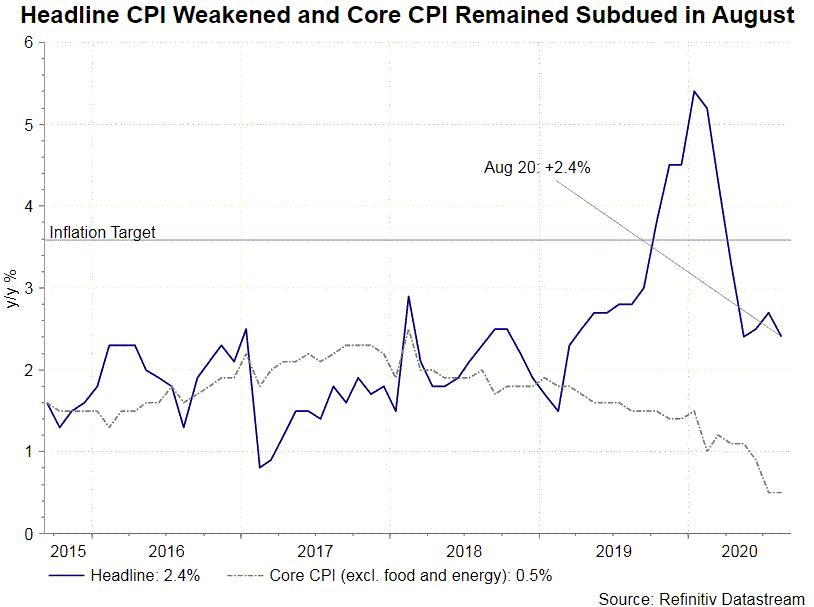
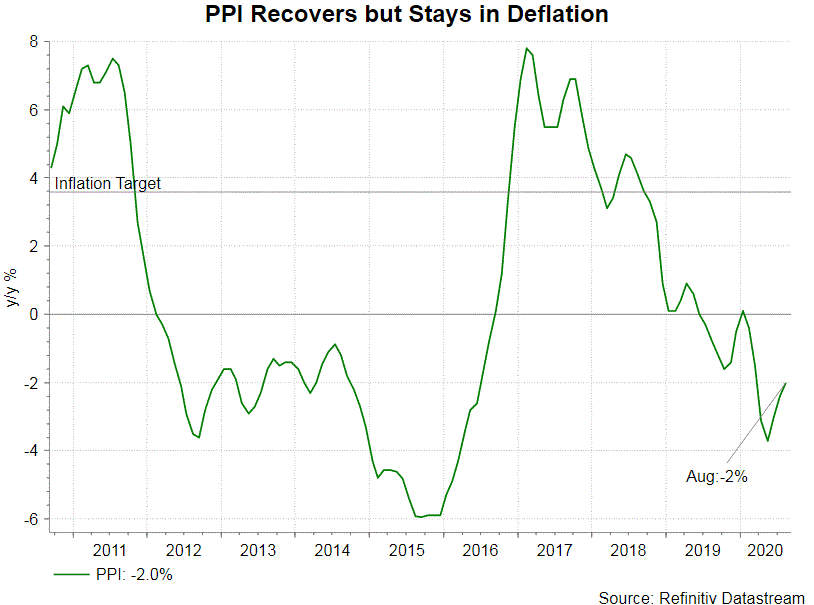
Headline CPI moderated to +2.4% y/y in August, from +2.7% a month ago. High base and softened growth in food inflation was the key reason for the slowdown. Food price rose +11.2% y/y, decelerated from +13.2% in July. This was mainly driven by the sharp moderation of pork inflation which eased to +52.6% from July’s +85.7%. Vegetable price picked up to +11.7% y/y, form +7.9% in July, however. Non-food inflation climbed slightly higher, by +0.1% y/y in August from a flat reading in July. Fuel price contracted -13.8% y/y, after a -15.5% decline in the prior month. Excluding food and energy, core inflation steadied at the subdued level of +0.5% y/y in August. PPI improved to -2% y/y, from July’s -2.4%. This signals that upstream prices stayed in deflation.
Earlier this week, it was reported that China’s trade surplus narrowed to US$ 58.93B in August from US$ 62.33B a month ago. Yet, this came in better than consensus of US$ 50.5B. Exports accelerated to +9.5% y/y in August from +7.2% in July, beating consensus of +7.1%. Besides low base, exports were helped by strong shipment to China’s largest trading partner, the US, which expanded +20% y/y in August, accelerating from +12.5% a month ago. Exports to Japan slipped -0.8% y/y, improving from -2% in July. However, exports to ASEAN grew +12.9%, easing from +14% in July. Exports to EU and Japan contracted -6.5% and -0.8% during the month, respectively. Hopefully, exports would continue to recover in coming months as global economy continues to improve.
– advertisement –
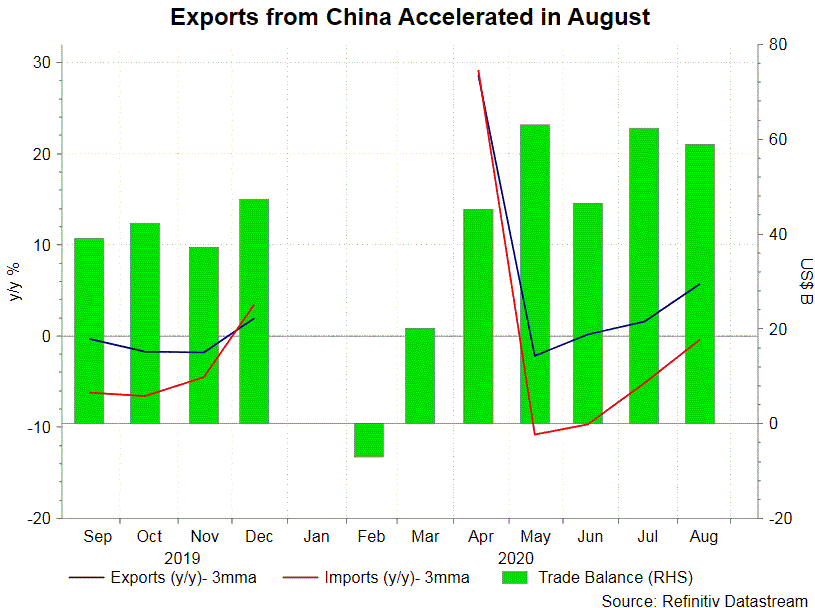
Imports contracted -2.1%, worsening from July’s -1.4%. Imports of major commodities remained weak. Copper imports expanded +67.2% y/y in August, decelerating form +72% a month ago. Iron ore imports contracted -4.9% y/y in August, following a gain of +10.6% in the previous month. Meanwhile, crude oil imports declined -24.6% y/y in August, after July’s -26.8% contraction. On agricultural products, China’s imports slowed especially in soybean and fruit. Country-wise, imports from EU, ASEAN, Africa and Latin America improved, while imports from US, Japan and Korea eased. It is likely that the slowdown of imports from Canada and Australia was driven by geopolitical tensions with these countries.